


Signs Your Grandfather Clock Needs Service

Updated: Jun 5
A grandfather clock is a remarkable machine. With proper care, many will run reliably for decades and sometimes even generations.
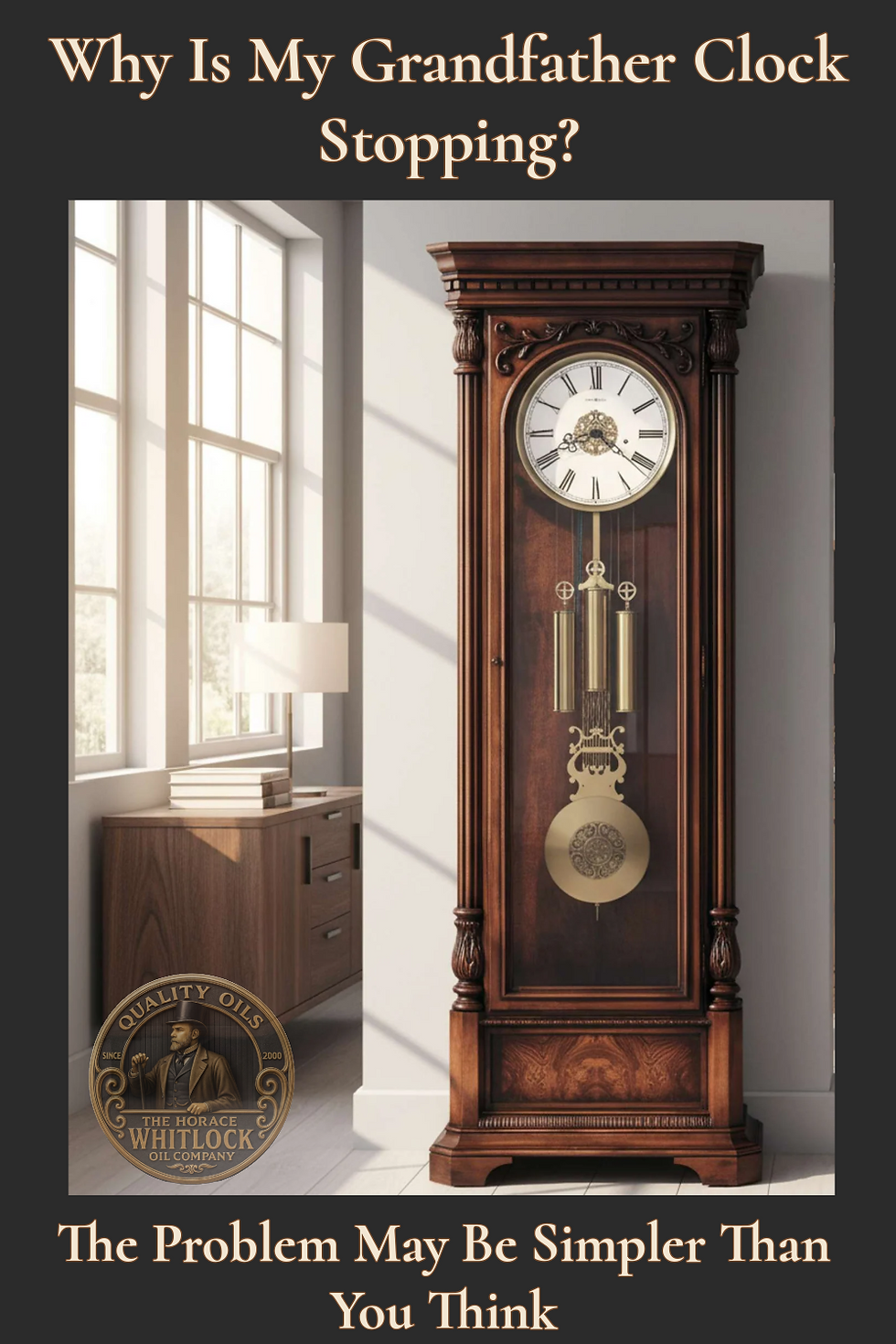
Unlike modern electronics, a mechanical grandfather clock rarely fails without warning. In most cases, it begins showing small signs that something is not quite right long before a major problem develops.
Learning to recognize these warning signs can help you protect your clock and avoid more costly repairs down the road.
Here are some of the most common signs that your grandfather clock may need service.
1. Your Clock Keeps Stopping
One of the most common complaints from clock owners is:
"My clock runs for a while and then stops."

The clock may run for several hours, a few days, or even a week before stopping unexpectedly.
Many owners assume the clock simply needs winding or a small adjustment. While that is sometimes true, repeated stopping is often a sign that the movement is struggling to operate properly.
Over time, lubricants can dry out, dust can accumulate, and normal wear can increase friction inside the movement. The clock may still run, but it is working harder than it should.
A grandfather clock that repeatedly stops is usually asking for attention before a larger problem develops.
2. The Clock Is No Longer Keeping Accurate Time
No mechanical clock is perfect.
Small adjustments are normal, and most grandfather clocks occasionally need minor time corrections.
However, if you find yourself constantly adjusting the clock and it still gains or loses significant time, it may indicate that service is needed.
As friction increases inside the movement, the pendulum may not swing as consistently as it should. This can affect the clock's ability to keep accurate time.
If your clock suddenly becomes less accurate than it used to be, it is worth paying attention to.
3. The Chimes Sound Different
Many grandfather clock owners become familiar with the sound of their clock over the years.
In fact, some people notice a change in the chime before they notice anything else.
Warning signs can include:
Chimes that sound weak
Missing notes
Incomplete melodies
Delayed striking
Chimes that seem unusually slow
These symptoms often occur when the movement is no longer operating as freely as it should.
Think of it this way: if you tried riding a bicycle while lightly applying the brakes, you could still move forward, but it would require much more effort.
The same thing can happen inside a clock movement when friction begins increasing.
4. The Clock Sounds Different Than It Used To
A healthy grandfather clock has a steady, even rhythm.
Many owners can recognize that sound instantly because they have heard it every day for years.
If you notice unusual sounds such as:
An uneven tick
Grinding noises
Clicking sounds
Hesitation during the chime sequence
your clock may be telling you that something has changed.
Clocks often communicate problems through sound long before they stop running completely.
That is why experienced clock owners pay attention whenever their clock suddenly sounds different.
5. The Weights Are Not Moving Normally
On most three-weight grandfather clocks, each weight powers a different function of the clock.
As the clock runs, the weights gradually move downward.
If one weight remains near the top for an unusually long time, drops much faster than the others, or behaves differently than it has in the past, it may indicate that the movement is not operating correctly.
This does not always mean a major repair is needed, but it is a sign that deserves attention.
Changes in weight movement often provide useful clues about what is happening inside the clock.
6. It Has Been More Than 5 to 10 Years Since Service
This may be the most overlooked warning sign of all.
Many grandfather clocks continue running even when maintenance is long overdue.
Unfortunately, this can create a false sense of security.
Inside the movement are dozens of small pivots rotating in brass holes. Proper lubrication helps reduce friction and wear. Over time, lubricants gradually age and become less effective.
The clock may continue operating, but wear can slowly increase with every tick.
Regular maintenance is often far less expensive than repairing damage caused by years of neglected service.
Can You Continue Using the Clock?
Many grandfather clocks will continue running even when service is overdue.

That does not necessarily mean everything is fine.
A useful comparison is your automobile.
A car will often continue driving even when the oil has become dirty and overdue for replacement. The engine may seem perfectly normal for quite some time. However, wear is slowly increasing inside the engine.
The same principle applies to a grandfather clock.
A clock movement can continue running while excessive wear is taking place inside. Addressing problems early is often the best way to prevent more costly repairs later.
Final Thoughts
A grandfather clock is more than just a timepiece. For many families, it is also a treasured heirloom filled with memories and history.
If your clock is stopping unexpectedly, losing time, chiming incorrectly, making unusual sounds, or simply has not been serviced in many years, it may be time to have it inspected.

Paying attention to these early warning signs can help keep your clock running reliably and preserve it for future generations.
After all, a well-maintained grandfather clock is often something that can be enjoyed by children, grandchildren, and generations yet to come.



Comments