


Horace Whitlock Grandfather Clock Library
How Does A Grandfather Clock Work
Before you can properly care for a grandfather clock, it helps to understand how it works. This guide was written by clockmakers for clock owners, using the same explanations we shared with our customers in our repair shop every day for more than 25 years.
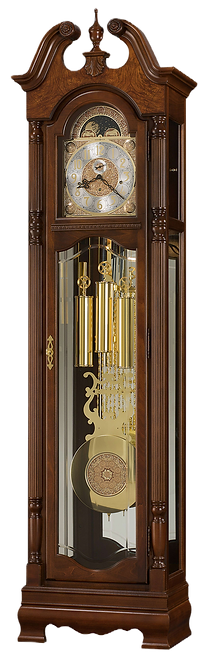
Understanding the Basics of a Grandfather Clock
Grandfather clocks have been keeping time for hundreds of years. While they may look complicated inside, the basic principles are surprisingly simple.
Every grandfather clock needs three things to operate:
-
A source of power
-
A way to control that power
-
A system to keep accurate time
In a grandfather clock, the weights provide the power, the escapement controls the power, and the pendulum regulates the speed of the clock.
Once you understand these three parts, the operation of a grandfather clock becomes much easier to understand.

The Weights Are the Engine
Many people believe the pendulum powers the clock. In reality, the weights are what make the clock run.
As the weights slowly descend, gravity pulls them toward the floor. This downward movement provides the energy needed to operate the clock.
The weights are connected to chains or cables, which turn a series of gears inside the movement.
Think of the weights as the engine of the clock.
Without the weights, nothing moves
Most modern grandfather clocks have three weights:
-
One weight powers the timekeeping portion of the clock.
-
One weight powers the chime system. (the portions of the song playing every ¼ hour)
-
One weight powers the strike system.
Each weight has a specific job to perform.
What Is a Clock Movement?
The movement is the mechanical "heart" of the grandfather clock.
The movement is the mechanical "heart" of the grandfather clock.
It contains dozens of carefully designed gears, levers,
springs, pivots, and other components that work
together to keep time.
When clock makers refer to a movement, they mean
the entire mechanical mechanism located behind the dial.
Every part inside the movement has a specific purpose.
If one part stops working correctly, the entire clock can be affected.

Understanding Gear Trains
One of the most confusing terms for clock owners is the word "train."
A train is simply a group of gears working together to perform a specific task.
Most grandfather clocks contain three separate trains.
The Time Train
The time train moves the hands around the dial and keeps track of minutes and hours.
Without the time train, the clock would not tell time.
The Chime Train
The chime train plays the melody every quarter hour.
On many grandfather clocks, this is the familiar Westminster chime.
The Strike Train
The strike train counts the hour and causes the clock to strike the correct number of times.
For example, at 8:00, the strike train causes the clock to strike eight times.
An important thing to understand is that these trains work together.
The time train tells the chime train when to operate.
The chime train then signals the strike train when it is time to strike the hour.
Because these systems are connected, a problem in one train can sometimes affect another.
The Escapement
What Does the Escapement Do?
If the weights were connected directly to the gears, the weights would immediately fall to the floor and the clock would run down in a matter of minutes.
Something must control the release of power.
That job belongs to the escapement.
The escapement allows power to be released one tooth at a time.
This controlled release is what creates the familiar ticking sound.
– Escapement Detail
Without an escapement, a grandfather clock simply cannot keep time.
The escapement acts like a traffic officer, allowing power to move through the clock in carefully controlled steps.


Here Is A Short Video To Help You Understand What The Escapement Is And How It Functions.
Understanding the escapement is much easier when you can actually see it working.
Watch this short demonstration showing:
✓ How the escapement wheel releases power one tooth at a time
✓ Why the clock produces a ticking sound
✓ What happens when the escapement is removed
✓ Slow-motion footage with arrows and explanations
The escapement is one of the most important parts of a grandfather clock because it controls how power is released from the weights and works together with the pendulum to regulate time.
Technical Note:
The escapement shown in the photo and video is from an American time-and-strike movement used for demonstration purposes. Although grandfather clock escapements are typically located between the movement plates, they perform the same basic function—controlling the release of power and regulating the clock's operation.

The Pendulum Controls Time
The pendulum is often misunderstood.
The pendulum does not power the clock.
Instead, it regulates how quickly the clock uses the power provided by the weights.
Think of the pendulum as the clock's timekeeper.
As the escape wheel releases power, it gently pushes the verge, causing the pendulum to continue its swing.
As the pendulum swings back and forth, it works together with the escapement to control the release of energy.
Each swing allows the escapement to release a small amount of power.
This process repeats continuously throughout the day.

How the Clock Keeps Accurate Time
The length of the pendulum determines how fast or slow the clock runs.
A longer pendulum swings more slowly.
A shorter pendulum swings more quickly.
This is why most grandfather clocks include a rating nut beneath the pendulum bob.
Turning the nut slightly changes the effective length of the pendulum and allows fine adjustments.
If a clock gains time, the pendulum is lengthened slightly.
If a clock loses time, the pendulum is shortened slightly.
Small adjustments can make a big difference over several days.

How The Chimes Work
One of the most enjoyable features of a grandfather clock is its chime system.
As the clock approaches a quarter hour, the time train activates the chime train.
The chime train then plays the appropriate melody.
Many grandfather clocks play:
-
Westminster
-
Whittington
-
St. Michael
-
Other traditional melodies
Small hammers strike metal rods to create the musical notes.
At the top of the hour, after the melody finishes playing, the strike train counts the hour and strikes the correct number of times.

Putting It All Together
Although a grandfather clock contains many parts, its operation can be summarized quite simply.
The weights provide the power.
The gear trains transfer the power.
The escapement controls the power.
The pendulum regulates the power.
The chime and strike trains announce the time.
When all of these parts work together correctly, a grandfather clock can keep accurate time for generations.
Frequently Asked Questions
Does the pendulum power the clock?
No. The weights provide the power. The pendulum regulates how quickly that power is used.
Why does my grandfather clock stop after I move it?
The clock may no longer be level, or the pendulum may not be in proper beat. Modern Auto-Beat systems often help correct this issue.
What is the ticking sound?
The ticking sound is created by the escapement releasing power one tooth at a time.
Why does my clock have three weights?
Most grandfather clocks use separate weights for the time train, chime train, and strike train.
Can I oil the movement myself?
Yes you can, however Proper lubrication is important, but using the wrong oil can cause serious problems. Only clock oil specifically designed for clock movements should be used.
Clock Maintenance Products
Keeping your grandfather clock properly lubricated is one of the best ways to reduce wear and help ensure reliable operation.
Explore the Horace Whitlock line of clock maintenance products, including our Premium Clock Oil and Clock Cleaning & Oiling Kit, developed from decades of professional clock service experience.
Originally Published: June 2026
Last Updated: June 2026
Continue exploring grandfather clock care guides, troubleshooting articles, maintenance advice, and clockmaker's notes.
Related Reading
-
Why Did My Grandfather Clock Stop?
-
Why Won't My Grandfather Clock Chime?
-
Signs Your Grandfather Clock Needs Service
-
How Often Should a Grandfather Clock Be Oiled?
-
What Oils Should Never Be Used on a Clock?